
Arrest Warrants in Faribault County
An arrest warrant is court process, plain and simple. It authorizes an officer to take someone into custody. In Faribault County, a District Court judge in the county's unified trial court issues it after a probable-cause review, not merely a charging decision. The path is short in practice. A complaint or affidavit goes to a judge, and a signed order comes out the other end. A public report row will never show you which step produced the process or what the order actually says.
Faribault County Probable Cause and Warrant Issuance
Start with Minnesota Rule of Criminal Procedure 3.01. It lets a judge issue either a summons or a warrant after reviewing a complaint, supporting documents, or sworn testimony. The rule tilts toward a summons unless specific conditions point to a warrant. Those include a substantial likelihood the person will not respond, that the person cannot be located, or that an arrest is needed to prevent imminent harm. A misdemeanor carrying only a fine starts with a summons too. A warrant follows only when the person fails to appear. That structure matters for anyone reading Faribault County records, because a warrant issued is a later event in the process, not another name for the charge itself.
What a Faribault County Arrest Warrant Contains
Rule 3.02 spells out what the document must contain. The judge signs it. It identifies the defendant by name or description, states the offense charged, and sets bail or release conditions. Compare those elements with what a Faribault County public report offers, and the gap is obvious.
| Defendant | The person named or described in the warrant, per Rule 3.02. |
|---|---|
| Offense Charged | The charge the court is acting on, carried on the warrant itself. |
| Bail or Conditions | Set by the court and written into the order. Not shown on the public report. |
| Issuing Judge | The judge who signed the warrant. Confirm through Court Administration. |
| Case Identity | From the court file, which carries District Court File No. and the charge history. |
| Public Report Fields | Name, Issue Date, Level of Offense, and Reason for warrant - Nightcap Notes only. |
Faribault County Arrest Warrant Execution Rules
Execution falls under Rule 3.03. An officer authorized by law may execute a warrant anywhere in Minnesota, except where law forbids it. The officer does not need the physical document in hand. He or she must simply tell the defendant about the warrant and the charge. Misdemeanor execution has timing limits. Generally it cannot happen on Sunday, or between 10 p.m. and 8 a.m., unless an exigency applies or a judge directs otherwise. Public highways and streets are an exception. None of this is a playbook for dodging service. It is the legal framework the Faribault County Sheriff's Office works inside, and it is why timing questions belong with that agency and with counsel. Minnesota Rule 3 holds the official text on issuance, contents, execution, and timing.
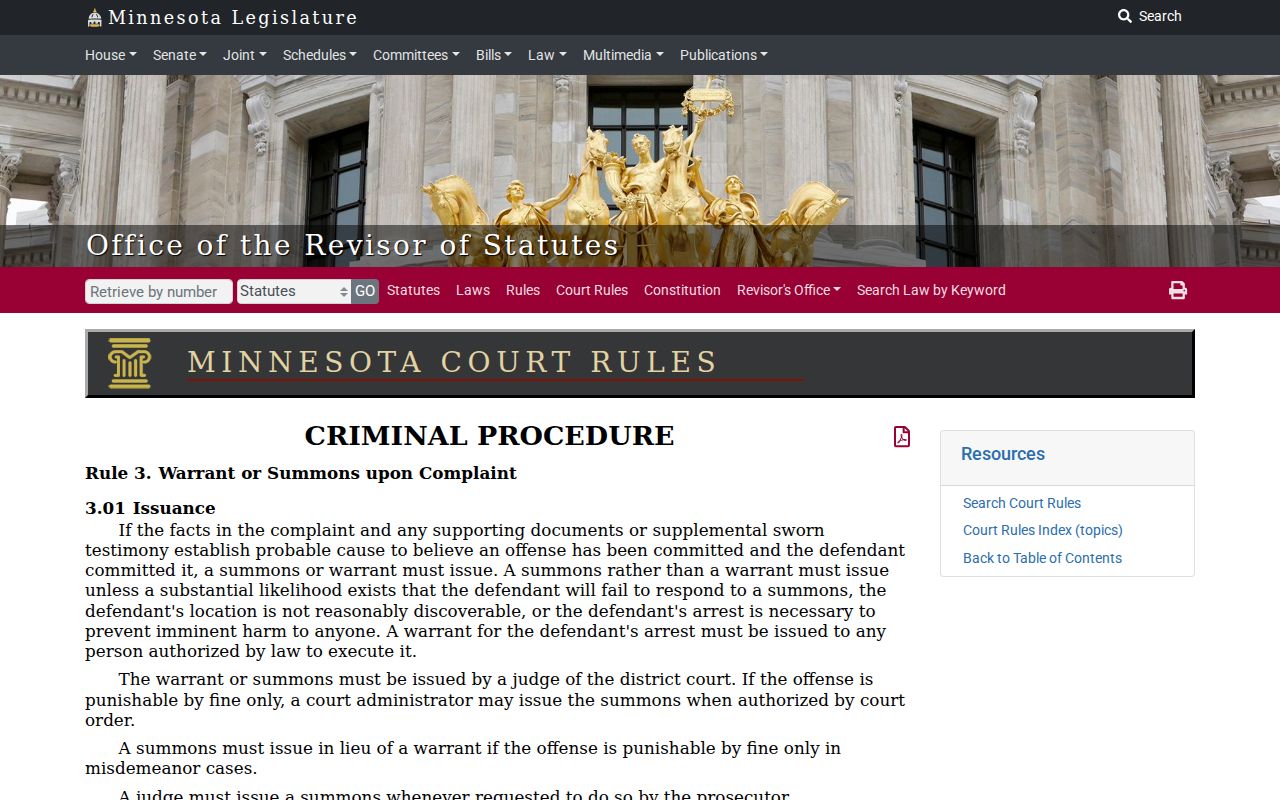
Read the rule for the framework, then ask the Faribault County Sheriff's Office how it applies to a specific matter.
How Arrest Warrants Are Served
The Faribault County Sheriff's Office serves county-level process, and its public page links the active warrant listing while confirming the Law Enforcement Center address at 320 Dr H Russ Street in Blue Earth. City police in Blue Earth, Wells, Winnebago, and Minnesota Lake can also execute process under Rule 3.03 as officers authorized by law. Where does service actually happen? It can occur at a residence, during a traffic stop, or when someone shows up on unrelated business. Faribault County publishes no warrant-division door, bond-window hours, or appointment procedure. The Sheriff's main line at 507-526-5148 is the documented contact for routing. No constable or city warrant unit is identified anywhere, and no local source assigns execution to one.
What Happens After a Faribault County Arrest
Rule 3.02 governs the first hours after arrest. The person must be brought promptly before the issuing court. If court is not in session, the person cannot be delayed unnecessarily and must appear no later than 36 hours after arrest, excluding the day of arrest, or as soon as a judge is available. From there, the warrant's bail and conditions and the judge's release decision control what happens next. Faribault County's jail page confirms the facility address and lists visiting, phone, and account information. It posts no bond window or intake schedule, which is why the office has to be asked directly. The Faribault County jail information page is the official source for facility links, and it is not a warrant lookup or a bond schedule.
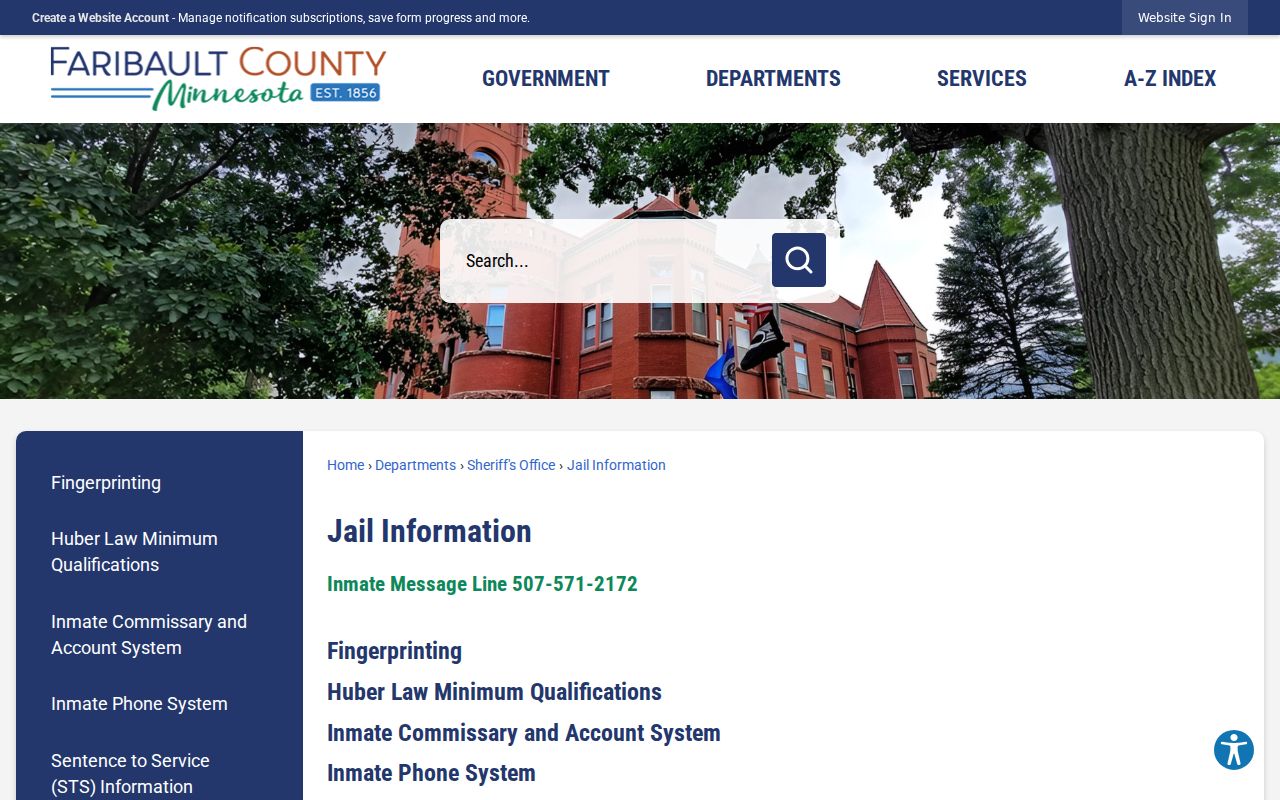
Use it for facility contacts, and call the Faribault County Sheriff's Office for anything about release or bond.
Arrest Warrant vs Summons vs Bench Warrant
Three instruments, three different orders. A summons tells a person to appear, with no custody involved. An arrest warrant authorizes custody on a charge. A bench warrant answers a missed obligation in a Faribault County case the person already had. Mix them up, and you end up at the wrong office chasing the wrong next step.
| Feature | Arrest Warrant | Summons | Bench Warrant |
|---|---|---|---|
| What It Orders | Custody on a charge | Appear on your own | Custody after a missed obligation |
| Basis | Probable cause on an offense | A charge that does not need custody | Failure to appear or comply |
| Who Issues It | District Court judge | Court or authorized officer | District Court judge |
| How to Respond | Surrender, bond, or counsel | Show up on the date | Recall or appearance |
Faribault County Warrants and Federal Cases
Federal warrants run through a separate system. Faribault County belongs to the U.S. District Court for the District of Minnesota, so a federal case is never a county matter just because the person lives there. Minnesota Court Records Online covers state District Court records, not federal dockets. For a federal docket, turn to PACER. It opens public access once you set up an account and handle its fees. It is not a live warrant list, though. Sealed complaints and arrest warrants stay off it. A person with a federal concern should contact the federal court, a lawyer, or the U.S. Marshals Service district page rather than rely on a Faribault County channel.
What to Do If There Is a Warrant for You
First confirm the warrant, then plan how to appear. Call the Sheriff's Office at 507-526-5148 and Court Administration at 507-526-6273. Ask which court issued it. Ask whether it sets bail or a signing notice. Ask where the office directs people to report. Faribault County publishes no walk-in surrender protocol, so confirm a location and hours before you go. From there, three paths exist, and a lawyer can help you choose. You can appear on the court's schedule, have counsel move to recall or quash the warrant, or post bond if the court authorizes release that way. Bond secures release or appearance, nothing more.
Important: Talk with a lawyer before turning yourself in, and confirm the court's reporting instructions by phone before you travel.
Faribault County Arrest Warrant Confidentiality
Minnesota keeps arrest-warrant-index data confidential until one of three things happens. The defendant is taken into custody, served with the warrant, or brought before a court. It opens early only when the agency decides public release serves a public purpose. That rule explains most confusion about Faribault County warrant lists. A missing name can mean several things. No warrant may exist. The warrant may have been issued after the list was generated, or the record may not be releasable yet. The Sheriff's Office or the court can say which. The statute behind that limit is Minn. Stat. 13.82, subd. 19. The Sheriff's Office also posts a forms and reports page with the data-practices request route for Faribault County records.